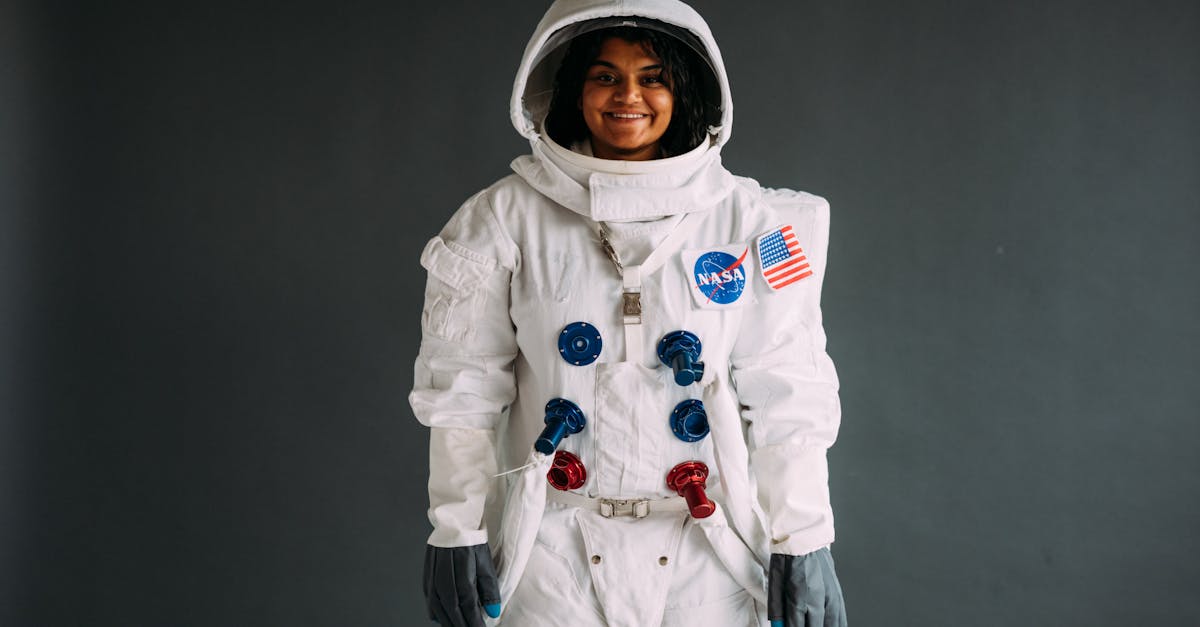
Following nearly thirty years of distinguished service, NASA astronaut Suni Williams has revealed her retirement, drawing to a close a career shaped by resilience, leadership, and groundbreaking accomplishments. Her final assignment, an unforeseen nine-month stretch in orbit during Boeing’s Starliner test mission, has risen as a defining moment in contemporary space exploration.
The announcement, confirmed by NASA on Tuesday, formally ends Williams’ tenure in the astronaut corps and transforms what was meant to be a short-duration test flight into her final journey to space. While the agency did not specify the precise timing behind her decision, the retirement caps a career that began in 1998 and spanned some of the most transformative years in human spaceflight. From the Space Shuttle era to commercial crew vehicles, Williams’ professional path mirrors NASA’s own evolution.
In a statement released through the agency, Williams expressed gratitude rather than finality. She described space as her “absolute favorite place” and reflected on the privilege of flying three times during her career. Her words underscored a sense of fulfillment rather than departure, suggesting a closing chapter written on her own terms, shaped by decades of preparation, discipline, and discovery.
A career shaped by exploration and transition
Williams’ inaugural journey into space occurred in 2006, when she reached the International Space Station aboard Space Shuttle Discovery, at a time when NASA still depended on its shuttle fleet as the main avenue for crewed access to low Earth orbit; her 2012 return, traveling this time on a Russian Soyuz spacecraft, underscored shifting geopolitical and operational realities as the agency increasingly relied on global partnerships after the shuttle program’s retirement.
Across these missions, Williams grew into a well-recognized figure on the space station, taking part in scientific experiments, station upkeep, and cooperative efforts with international partners. Her contributions extended beyond purely technical duties; she also emerged as a public ambassador for human spaceflight, distinguished by her composed attitude, strong physical endurance, and readiness to stretch the limits of what astronauts could achieve in orbit.
Her final assignment, nonetheless, thrust her into the global spotlight in a way few astronauts ever encounter. Tasked with helping evaluate Boeing’s Starliner capsule during its inaugural crewed mission, Williams and fellow astronaut Butch Wilmore anticipated spending about a week aboard the station. Instead, technical issues with the spacecraft prolonged their mission to more than nine months, transforming what was meant to be a straightforward test into an extended display of resilience and adaptability.
The Starliner mission and an unexpected extension
The Boeing Starliner mission was designed as a critical milestone in NASA’s Commercial Crew Program, intended to certify the spacecraft for regular astronaut transport. While the capsule successfully reached the International Space Station, a series of technical issues emerged during the flight, including thruster malfunctions and gas leaks. After careful analysis, NASA decided not to risk a crewed return and instead flew the Starliner back to Earth without astronauts.
For Williams and Wilmore, this decision meant remaining aboard the station far longer than planned. Despite the unexpected extension, both astronauts consistently emphasized that they were well-prepared for such contingencies. Long-duration missions are not uncommon on the station, and Williams’ extensive experience made her particularly suited to the challenge.
Their extended stay captured international attention, not because of crisis, but because of the professionalism with which the situation was handled. Williams repeatedly noted that she enjoyed her time in orbit and valued the opportunity to continue contributing to station operations and research. When she finally returned to Earth aboard a SpaceX Crew Dragon capsule in March 2025, the mission had already taken on symbolic weight as a testament to resilience and cooperation across programs and companies.
Achievements, key milestones, and individual breakthroughs
Beyond individual missions, Williams’ career is distinguished by a series of records that place her among the most accomplished astronauts in NASA history. Over the course of her flights, she accumulated 608 days in space, the second-highest total for any NASA astronaut. This figure reflects not only opportunity, but trust—long missions are assigned to astronauts with proven reliability and leadership.
Her accomplishments beyond the spacecraft are just as remarkable. Williams accumulated 62 hours of spacewalks over nine extravehicular missions, a record that makes her the most seasoned female spacewalker and places her among the leading spacewalk veterans worldwide. These hours reflect some of the most strenuous tasks astronauts undertake, involving essential repairs, upgrades, and installations that ensure the station remains fully operational.
Williams also became known for combining athletic achievement with scientific curiosity. In 2007, she completed a marathon aboard the space station, running on a treadmill while tethered to prevent floating away. Five years later, she became the first person to complete a triathlon in space, adapting swimming and cycling to the constraints of microgravity. These feats were not novelty acts, but demonstrations of how human physiology and motivation adapt beyond Earth.
Leadership and legacy within NASA
Colleagues and NASA leadership have consistently highlighted Williams’ influence beyond her technical accomplishments. Vanessa Wyche, director of NASA’s Johnson Space Center, described her as a pioneering leader whose contributions will inspire future generations. Such recognition reflects Williams’ role as a mentor, commander, and example within the astronaut office.
Her remarks at the time of her retirement reflected this wider outlook, as she shifted attention away from individual accomplishments and highlighted the shared contributions driving space exploration, including the engineers, researchers, and global collaborators who enable each mission. She underscored the role of the International Space Station as a cornerstone for upcoming ventures, linking her professional journey to humanity’s advancing efforts toward the Moon and Mars.
This focus on continuity stands at the heart of Williams’ legacy, as she contributed to missions that broadened scientific knowledge and helped confirm the reliability of systems and procedures designed for more distant exploration; in doing so, her career becomes a link across generations, uniting the shuttle era, international cooperation, and the emergence of commercial spacecraft.
A familiar path into retirement
Williams’ decision to retire follows a pattern seen among astronauts who conclude their careers after major milestone missions. Her fellow Starliner crewmate, Butch Wilmore, also announced his departure from NASA following their return from orbit. Similar choices were made by Bob Behnken and Doug Hurley after piloting the first crewed SpaceX Crew Dragon mission in 2020.
Such timing is not coincidental. Test flights of new spacecraft represent some of the most demanding assignments in the astronaut corps, requiring years of training and an acceptance of uncertainty. Completing such a mission often provides a natural point of closure, allowing astronauts to step away after contributing to a lasting capability.
For Williams, the Starliner mission carries added significance precisely because of its unpredictability. What began as a short test evolved into a prolonged demonstration of commitment, adaptability, and trust in NASA’s decision-making process. Ending her career after such a mission underscores a willingness to embrace challenge until the very end.
Starliner’s upcoming prospects and Williams’ closing remarks on the program
Questions remain about the future of Boeing’s Starliner capsule. NASA has indicated that the spacecraft’s next flight will likely be uncrewed, allowing engineers to address the technical issues encountered during Williams and Wilmore’s mission. The timeline for a return to crewed flights has not been finalized.
Despite these uncertainties, Williams has spoken positively about the spacecraft. In post-flight comments, she emphasized its capabilities and expressed confidence in the ongoing work to resolve outstanding issues. Her remarks reflected a measured, engineer’s perspective—acknowledging problems without diminishing the broader value of the program.
This balanced perspective bolsters the credibility Williams has cultivated throughout her career, and instead of stepping back from a mission that faced obstacles, she presented it as an expected element of spaceflight’s ongoing trial‑and‑refinement cycle. Her expressed trust in the program functions as an endorsement grounded in direct experience rather than mere hope.
Closing a chapter, shaping what comes next
Suni Williams’ retirement marks the end of an era, but not a withdrawal from the narrative of space exploration. Her career encapsulates the qualities NASA has long sought in its astronauts: technical excellence, physical endurance, collaborative spirit, and the ability to adapt under pressure. The unexpected length of her final mission adds a distinctive note to that story, transforming a routine test into a defining conclusion.
As NASA prepares for new milestones, including lunar missions and eventual journeys to Mars, the foundation laid by astronauts like Williams remains essential. Her work aboard the International Space Station, her role in validating new spacecraft, and her example as a leader will continue to influence how future crews train, operate, and persevere.
While Williams herself has said that space will always be her favorite place, her legacy now belongs firmly on Earth as well—embedded in the systems, standards, and aspirations that will carry human exploration forward.