1. Rosalind Franklin (1920–1958)
Field: Molecular Biology and X-ray Crystallography
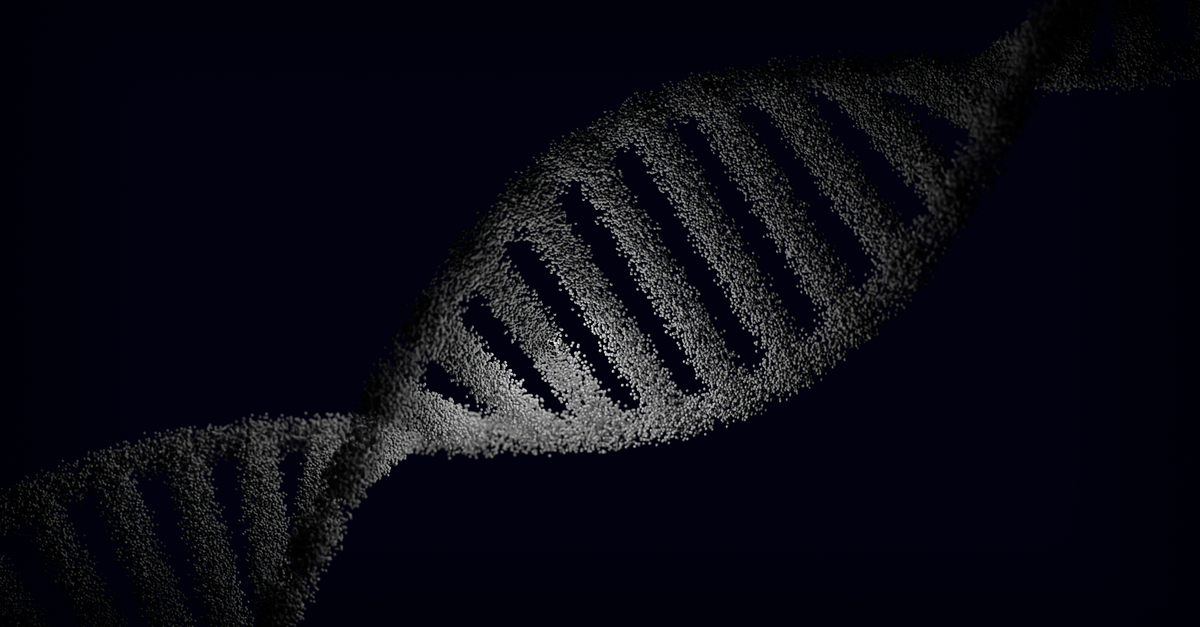
Rosalind Franklin’s precise X-ray diffraction images of DNA, particularly the famous Photograph 51, provided critical evidence that DNA has a double-helix structure. Her data were shown without her permission to James Watson and Francis Crick, who used the information to build their model of DNA in 1953. Watson, Crick, and Maurice Wilkins received the 1962 Nobel Prize in Physiology or Medicine; Franklin, who had died four years earlier, was not recognized.
Her case remains one of the most cited examples of gender bias in twentieth-century science, highlighting how access to data and institutional power shaped credit allocation.
2. Lise Meitner (1878–1968)
Field: Nuclear Physics
Lise Meitner co-discovered nuclear fission with Otto Hahn. After fleeing Nazi Germany due to her Jewish heritage, she continued collaborating in exile and provided the theoretical explanation for nuclear fission in 1938. In 1944, Hahn alone received the Nobel Prize in Chemistry for the discovery.
Meitner’s exclusion reflected both political upheaval and gender discrimination. Her calculations demonstrated how uranium atoms split and released enormous energy, laying the foundation for nuclear energy and weapons.
3. Chien-Shiung Wu (1912–1997)
Field: Experimental Physics
Chien-Shiung Wu conducted the groundbreaking experiment that disproved the law of parity conservation in weak nuclear interactions. The theoretical physicists Tsung-Dao Lee and Chen-Ning Yang proposed the idea and received the 1957 Nobel Prize in Physics. Wu’s meticulous experimental validation was indispensable, yet she was overlooked.
Her work reshaped particle physics by demonstrating that nature does not always behave symmetrically at the subatomic level.
4. Jocelyn Bell Burnell (1943– )
Field: Astrophysics
As a graduate student in 1967, Jocelyn Bell Burnell discovered the first radio pulsars while analyzing radio telescope data. Her supervisor Antony Hewish and colleague Martin Ryle received the 1974 Nobel Prize in Physics for the discovery.
Bell Burnell’s careful data analysis and persistence led to identifying the unusual radio signals from rapidly rotating neutron stars. Decades later, she received major awards and donated prize funds to support underrepresented students in physics.
5. Nettie Stevens (1861–1912)
Field: Genetics
Nettie Stevens discovered that sex is determined by chromosomes, specifically identifying the X and Y chromosomes. Although her research paralleled that of Edmund Beecher Wilson, Wilson often received more recognition in early accounts.
Stevens’ experiments with mealworms demonstrated that males produce two types of sperm, laying the groundwork for modern genetics and understanding hereditary mechanisms.
6. Henrietta Leavitt (1868–1921)
Field: Astronomy
Henrietta Swan Leavitt discovered the relationship between the luminosity and pulsation period of Cepheid variable stars. This “period-luminosity relationship” enabled astronomers to measure cosmic distances accurately.
Although her discovery became fundamental to Edwin Hubble’s determination that the universe is expanding, she received little recognition during her lifetime. Her work transformed cosmology by providing a reliable cosmic distance scale.
7. Esther Lederberg (1922–2006)
Field: Microbiology and Genetics Esther Lederberg identified the lambda bacteriophage alongside devising replica plating, an indispensable method for analyzing bacterial mutations and antibiotic resistance. Her spouse, Joshua Lederberg, was awarded the 1958 Nobel Prize in Physiology or Medicine for his research into bacterial genetics. Her input proved vital to comprehending gene transfer and microbial evolution, although systemic prejudice hindered her professional progression and acknowledgment.
8. Mileva Marić (1875–1948)
Field: Theoretical Physics
Mileva Marić, a physicist and mathematician, collaborated closely with Albert Einstein during his early career. Some historians argue that she contributed to the mathematical development of his early papers, including work related to special relativity.
While definitive evidence remains debated, correspondence indicates intellectual partnership. The broader issue concerns how women’s collaborative roles were often minimized or omitted in scientific authorship.
9. Marthe Gautier (1925–2022)
Field: Medical Genetics
Marthe Gautier identified the chromosomal abnormality responsible for Down syndrome in 1958, demonstrating the presence of an extra chromosome 21. Her colleague Jérôme Lejeune became widely credited with the discovery.
Gautier’s cytogenetic expertise and laboratory work were crucial to identifying trisomy 21, a milestone in medical genetics.
10. Rosalind Franklin’s Colleague: Raymond Gosling’s Overlooked Context
Field: Structural Biology
Although Franklin’s input remains foundational, the wider lab setting demonstrates that junior researchers—such as Franklin in her earlier positions—frequently saw their intellectual guidance downplayed. Franklin steered essential DNA imaging investigations and analyzed diffraction patterns accurately.
Her situation highlights the ways in which stratified laboratory hierarchies influenced credit and publication authorship.
11. Vera Rubin (1928–2016)
Field: Astronomy
Vera Rubin provided convincing observational evidence for the existence of dark matter by studying galaxy rotation curves in the 1970s. Although widely honored, she never received a Nobel Prize, despite her discovery fundamentally altering cosmology.
Her measurements showed that galaxies rotate at speeds inconsistent with visible matter alone, implying the presence of unseen mass that constitutes most of the universe.
12. Margaret H. Wright (1931– )
Field: Computer Science and Numerical Analysis
Margaret H. Wright made foundational contributions to numerical optimization and scientific computing. In the early development of computational mathematics, women’s work was often categorized as auxiliary rather than theoretical.
Her research shaped algorithms used in engineering, logistics, and data science, though recognition in early decades disproportionately favored male counterparts.
Trends Fueling the Financing Void
Across these cases, several recurring factors emerge:
- Institutional hierarchy: Senior male scientists often controlled publication and recognition.
- Exclusion from awards: Prize committees historically favored established male researchers.
- Political and social barriers: War, displacement, and discrimination disrupted careers.
- Authorship inequities: Women’s collaborative or experimental roles were minimized.
- Limited access to positions: Many worked in subordinate roles despite leading discoveries.
Historical analyses of Nobel nominations and scientific publications show that women represented a small fraction of recognized scientists throughout the twentieth century. Systemic bias, restricted academic appointments, and social expectations constrained visibility and advancement.
Enduring Influence on Science and Acknowledgment
The scientific achievements of these twelve women transformed genetics, physics, astronomy, microbiology, and computational science. Their discoveries underpin technologies ranging from medical diagnostics and nuclear energy to space exploration and modern computing.
Revisiting their stories is not merely corrective; it clarifies how knowledge advances through collaboration, persistence, and intellectual rigor regardless of gender. Recognizing overlooked contributors deepens the integrity of scientific history and encourages more equitable structures for future discovery.